Flashy websites look nice, but they can be slow to load. Most successful sites are simple and user friendly. Continue on for a number of great tips so you can keep your site clean and simple.
To make your website as easy to use as possible, consider using a fixed-position menu. This means that when the visitor goes down your page, the navigation panel will be locked. Not only do visitors find this convenient, but so do internet marketers who have calls to action they want in place.
Frames have not been used in website design since the 90’s. Frames had they heyday, but there were not without issue. Frame designs make the bookmarking difficult on your visitors, and it also makes scrolling a chore as well. There are easier ways to give seamless flow to your site.
Broken Links
Always look for broken links prior to publishing pages on the web. Error pages can be very frustrating to visitors. You can do manual checks or seek out a program that will do a scan and give notice of broken links.
Be careful with your use of JavaScript. JavaScript does open many doors when it comes to website design, but it can also close the door to your website for some visitors. Each web browser is different, and each has a new version on a regular basis. Some people accessing your website are going to do so with a browser that is not fully updated and compatible with your JavaScript. Also, not everybody has JavaScript enabled on their browser. This means that a portion of your visitors won’t be able to use your website.
Make use of keyword research. Of course, you must provide valuable and relevant content; however, you can optimize it with judicious use of excellent keywords. Knowing the right keywords will help you bring people that have an interest in the things you have on your site.
A search engine is an absolute must if your website is larger than a few pages. Put a search box in the uppermost right-hand corner of your homepage so that users can seek specific topics on your site. FreeFind and Google both distribute a search function which you can use on your site.
Make sure the content on your website is interesting. Yes, your design should be nice, but the content will bring visitors back. Visitors will come back over and over when you provide content that is of value to them.
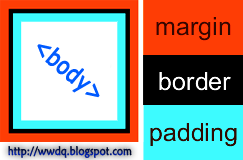
Good websites are optimized for older IE browsers, like 7 and 8. People may say they dislike Internet Explorer, but a majority of them still use it. This creates problems for web designers, but there are things that can be done. Make sure to look at the infamous “box model bug,” which has been an issue for IE for several years.
Meta Tags
Never underestimate the value of great meta tags throughout your website. Using relevant meta tags on each page of your site will help search engines categorize the page and show it to people who want to know about your page’s topic. Tags that incorrectly label your site can cause visitors searching for your site’s niche to not find the site, reducing the number of hits.
Be sure to make sure that your website works on the different browsers that are out there. A given web browser will interpret a website differently than another one will, and sometimes the differences are quite drastic. There are a number of resources that you can use to determine what popular web browsers should be tested. Do not neglect mobile browsers, as they are increasingly used by people of all ages; test to see that your new site works across a full spectrum of browsers.
Using the information shared here, you can create a great site. Once you understand simple website development, you can build a great site. These two things will help ensure your visitors have a pleasant time navigating and visiting your website.